 براساس برند
 براساس کاربری
Blockchain Technology in Banking: Guide & Use Cases
This is not to say that a traditional network structure is not effective. Transactions take time to process and cost money; they are not validated by all parties due to limited network participation, and they are prone blockchain accounting to error and vulnerable to hacking. To process transactions in a traditional network structure also requires technical skills.
- Blockchain accounting requires auditors to delve into transaction classification and record keeping.
- A smart contract is a code that reflectsthe terms and conditions of a contract between theentity and the supplier and executes itself without anyhuman intervention.
- Peyman Khosravani is a seasoned expert in blockchain, digital transformation, and emerging technologies, with a strong focus on innovation in finance, business, and marketing.
- To be safe, stay updated with evolving laws and accounting standards related to blockchain.
- Integrating blockchain into accounting can eliminate invoice falsification.
- Accountants will not need to be engineers with detailed knowledge of how blockchain works.
Improved Regulatory Compliance

Even though blockchain technology is more secure than a traditional database, it is still susceptible to a security breach. In a public network, a group of participants (or participant) with 51% of the computing power may collude to revise transactions in the network. To mitigate of the risk of a “51% attack,” a public network may adopt a different consensus algorithm (e.g., proof-of-stake in lieu of proof-of-work). Using such an algorithm will prevent collusion among members of the network, because the stakeholders of a transaction have an interest to act in a nonmalicious manner. Blockchain technology in accounting is a revolutionary decentralised and distributed ledger technology (DLT) that records data in chronological order.
Cryptoworth: The Best Solution to Streamline Crypto Accounting for Businesses
- Like many other industries, accounting is undergoing a significant transformation driven by technological advancements.
- On top of that, it provides them better access to the information on the client’s systems.
- Another critical issue is the regulatory and legal landscape surrounding blockchain technology.
- For accountants, this means that audits can be performed more efficiently and with greater confidence in the accuracy of the data.
- Nowadays, blockchain reshapes the functionality of the fintech industry, invoking a significant interest in institutions that work with financial operations directly.
While blockchain has the potential to streamline processes, reduce operational costs, and enhance compliance, its integration into existing accounting systems may take time. Outsourcing blockchain accounting services can provide a valuable solution to these challenges. By leveraging external expertise, businesses can ensure compliance, minimize integration difficulties, bridge skill gaps, and protect sensitive data while implementing blockchain technology.

Innovations Driven by Blockchain in Accounting
- But despite the considerable engagement by different agencies and recognition of blockchain technology as an important part of the future financial infrastructure, formal rulemaking is yet expected.
- Each transaction is secured by a cryptographic hash, which is a unique identifier that links it to the previous transaction.
- If you’re eager to learn how blockchain is revolutionizing the world of accounting and finance, join us on this journey.
- For example, in due diligence in mergers and acquisitions, distributed consensus over key figures allows more time to be spent on judgemental areas and advice, and an overall faster process.
- As organizations continue to explore and innovate with blockchain technology, we can expect to see even more creative and impactful use cases in the field of accounting.
- A few years ago we were talking about blockchain’s potential to radically disrupt the accountancy profession.
- With blockchain accounting, organizations can effectively execute the double entry system for recording accounting transactions.
This will lead to more reliable and trustworthy financial environments. It’s not just about making things digital; it’s about making them fundamentally different. Companies are starting to move away from old systems and use new tech that’s more efficient and secure. This is especially important for companies that work in different countries and need to report their finances in real-time. Blockchain tech is really changing how we look at financial transparency.
Predictions for Blockchain Adoption

Immutability is another principal blockchain advantage as it makes transactions immutable to tamper with. This is because blockchain operates within the principles of cryptography, decentralization, and consensus. The core idea of blockchain decentralization is that no single entity can have full control over the transactions, and multiple parties can validate them. So, to me, I’ll see the uneven evolution, and maybe people aren’t wanting to see Blockchain 101. bookkeeping But going forward, it will be even more critical for the profession to be involved in the conversation.

Best AI Math Solvers for Instant Homework Solutions
- The public set represents virtually irrefutable evidence of the underlying transactions.
- Smart contracts, for example, can automate and enforce terms of agreements without the need for intermediaries.
- Another concern is the risk of 51% attacks, where if a single entity gains control of the majority of the network’s computing power, they can manipulate transactions.
- Sure, there are challenges, like needing to learn new skills and adapt to new systems, but the benefits are hard to ignore.
- Let’s explore how blockchain is reshaping accounting practices and the benefits it provides.
- By providing a decentralized and immutable ledger, it ensures that financial records are tamper-proof and transparent.
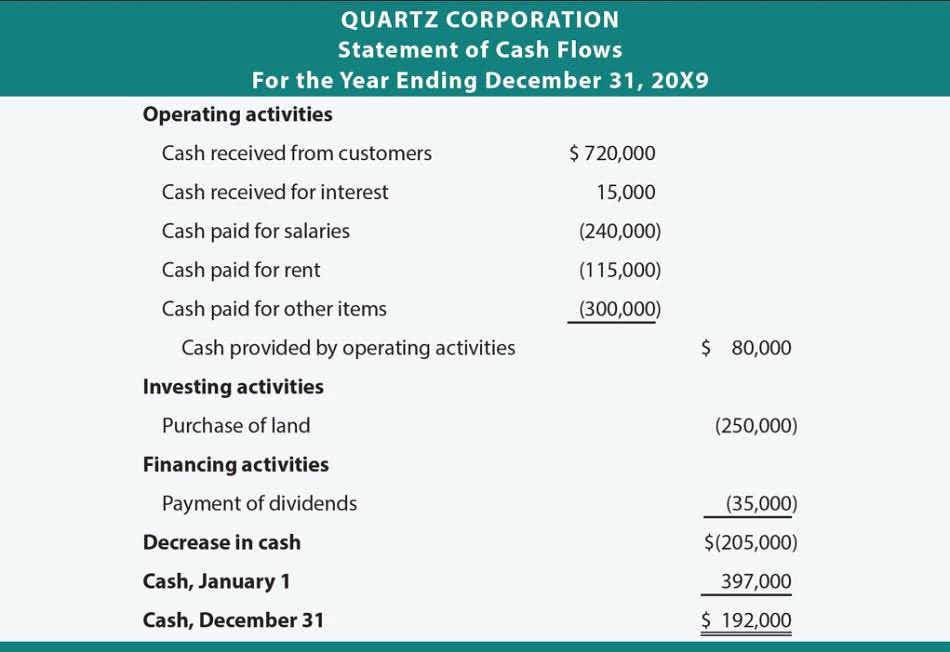
The cryptographic links between blocks ensure that any attempt to alter a record is immediately detectable. This level of transparency builds trust among stakeholders, including investors, regulators, and auditors, fostering confidence in financial reporting and decision-making processes. Blockchain accounting is changing the way we think about financial records. As we move into 2025, Cash Flow Statement it’s clear that this technology is not just a trend; it’s a fundamental shift in how businesses manage their finances.